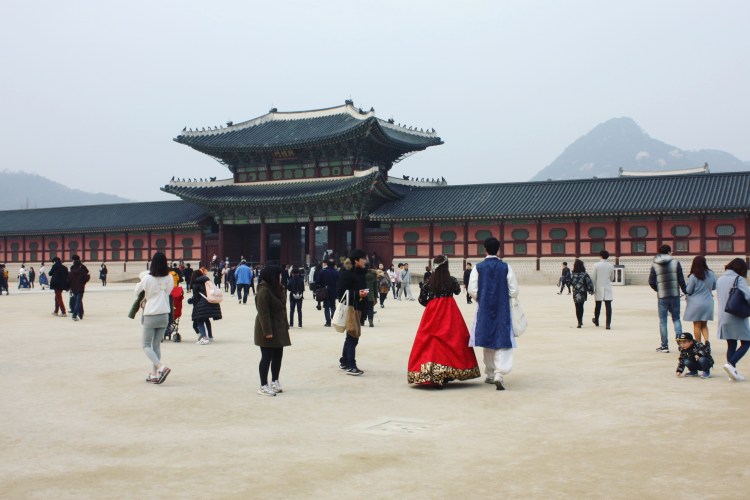
Since living in South Korea, we’ve visited two of the “Five Grand Palaces” built during the Joseon dynasty.
As with a lot of the historical structures in Seoul, the palaces were ravaged, pillaged, and destroyed by the Japanese. All have been burnt down or partially burnt down, or burnt down multiple times and rebuilt over again. Needless to say, Korea is not a big fan of the Japanese. Before moving here, my knowledge of this long and bloody conflict between the two countries was really lacking.
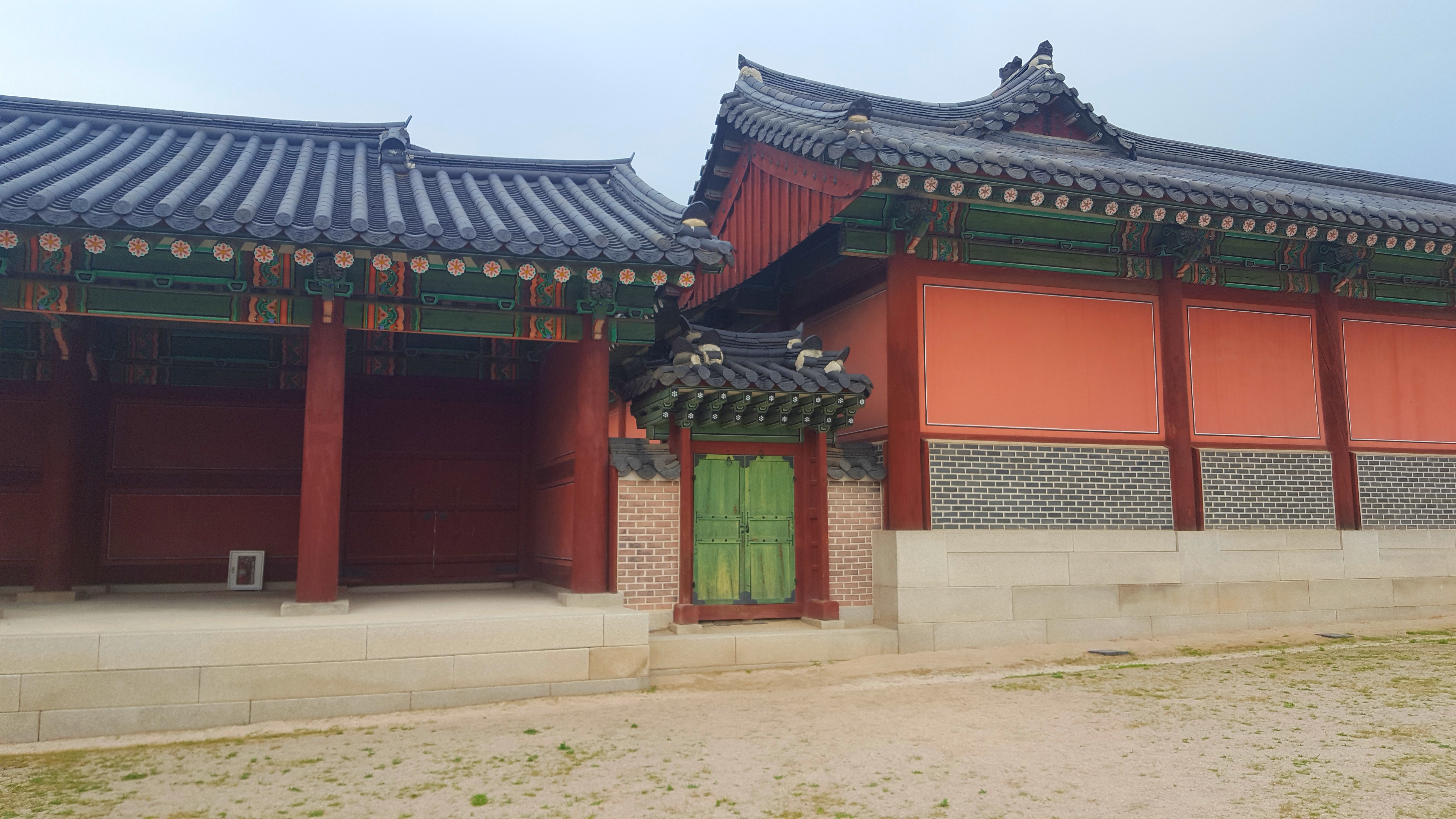
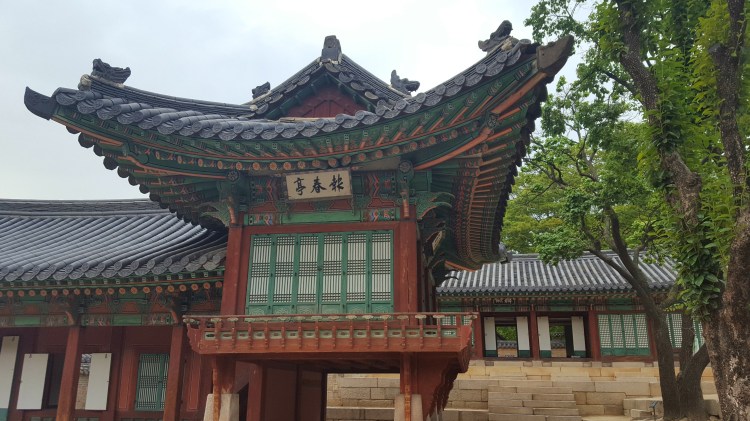
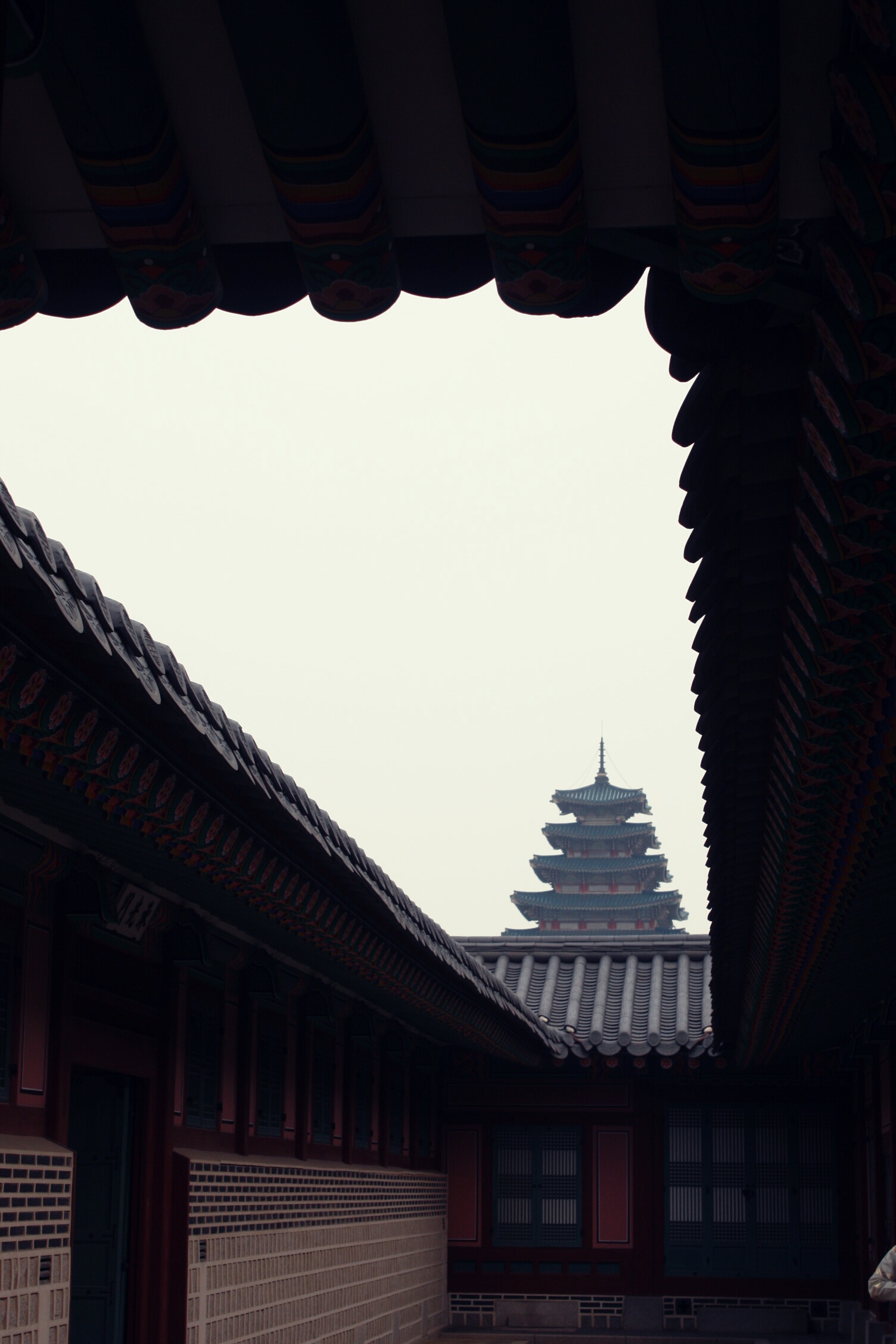
All the palaces are painted in a style called “dancheong” (단청), a Korean traditional method of decorating in specific patterns and colors on wooden buildings. The five colors used to render the complex and beautiful designs are based on the traditional Korean color spectrum (obangsaek – 오방색) representing five cardinal directions and elements: blue (east, wood), red (south, fire), yellow (center, earth), white (west, metal), and black (north, water).


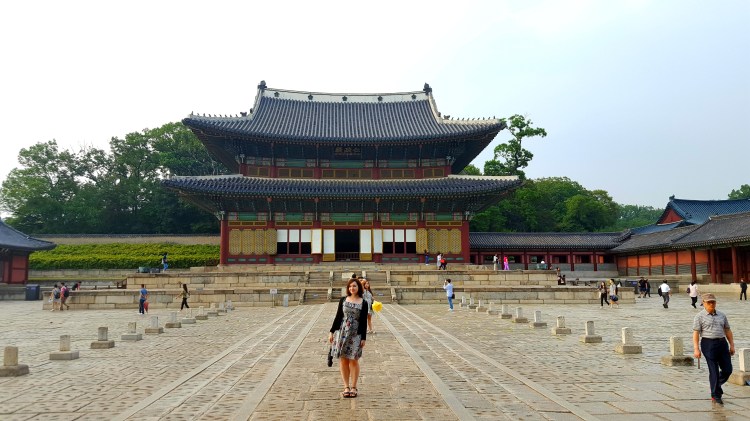
Changdeokgung (창덕궁)
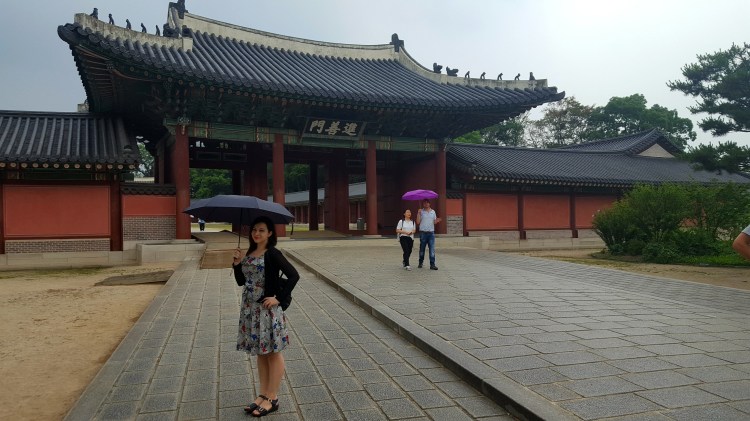
We arrived at Changdeokgung on a rainy day, which was ultimately fortuitous as we got to wander the palace grounds without too many other people around.
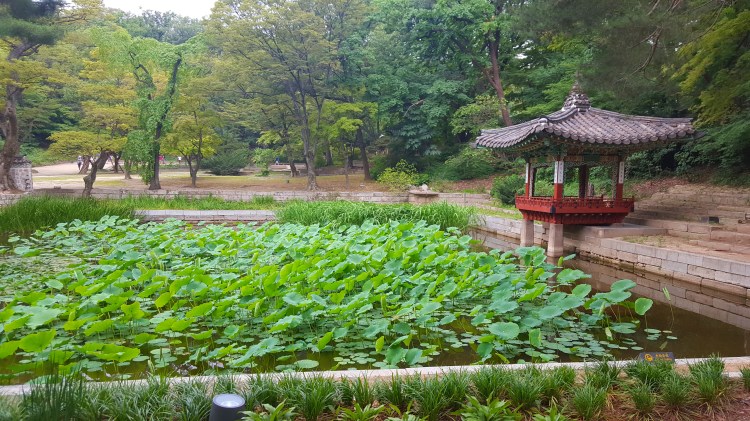
This particular palace is probably most known for its “secret garden”, “secret” really meaning “no peasants allowed”. This garden for fancy people is large, bestrewn with pavilions and small structures where royalty could kick back and relax. To gain access we had to pay a little extra on top of the entrance fee for a tour – which was the last one of the day so there was a sizeable group.
It rained off and on during the walk, but it was mostly clear until the end. We strolled by the numerous decorated pavilions and beautiful scenery – it was a truly serene environment, I can see why the Joseon dynasty Kings wanted to keep this place all to themselves.
Throughout the tour, there was this amusing mom/son couple. The son was around 5 or 6 years old, and his mom kept having him take pictures of her vogueing throughout the tour. It was pretty cute. Near the end, as the skies opened up to throw hordes of angry rain droplets onto us, the boy sought shelter under the tour guide’s umbrella as she was describing the last group of buildings (mom hadn’t brought an umbrella). As she attempted to move on, she asked where his parents were – all the while the mom was taking pictures of her son with the tour guide…not responding to the inquiry. Awkward tour pause until the son ran back into the crowd.
After exiting the garden, and checking out this ancient twisted tree that’s apparently used for incense/is a national treasure, we walked through the rest of the palace virtually alone. It’s fun to explore these old complexes, and being more isolated within the palace grounds gives the impression of being transported back in time

Gyeongbokgung (경복궁)
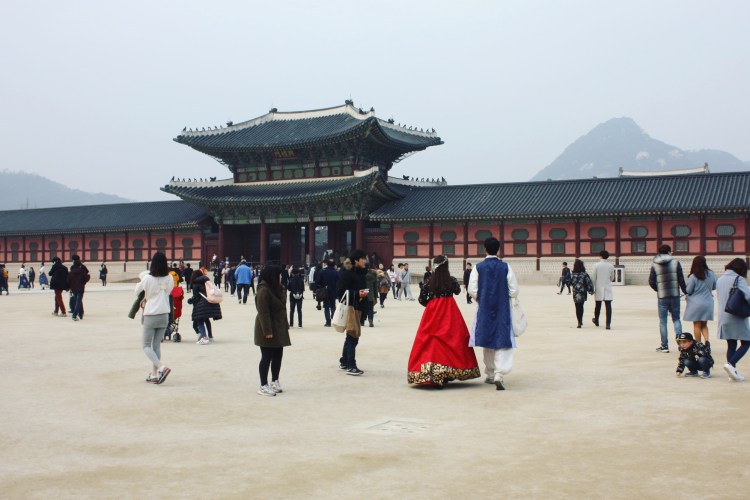
In contrast to Chandeokgung, Gyeongbokung feels massive, the grounds are expansive and more imposing – this was the main palace for the Joseon Dynasty Kings, and it certainly gives that impression. We visited on a busy day, so there were tons of people strolling around, many wearing rented hanboks (hanbok = free entry, by the way).
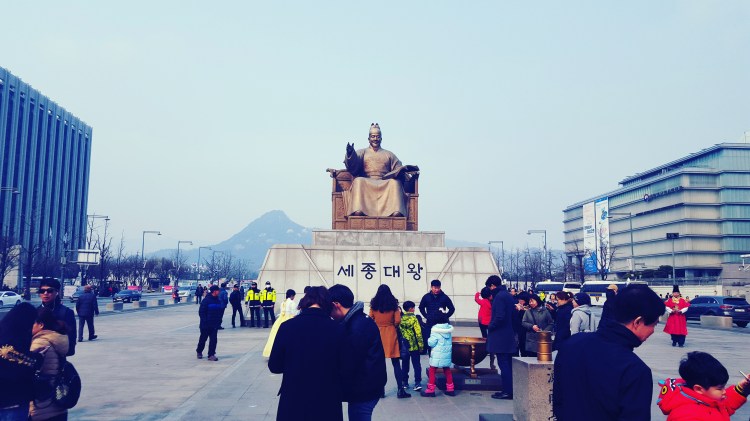
Situated in front of the palace entrance is a square with a statue of King Sejong – probably the most famous King in Korean History. This is the guy who purportedly invented the Korean Alphabet (Hangul), which was created to ensure literacy of the entire population. Previously Chinese characters were used, and only those of the upper classes could read them. Bam. There’s your history lesson for the day.
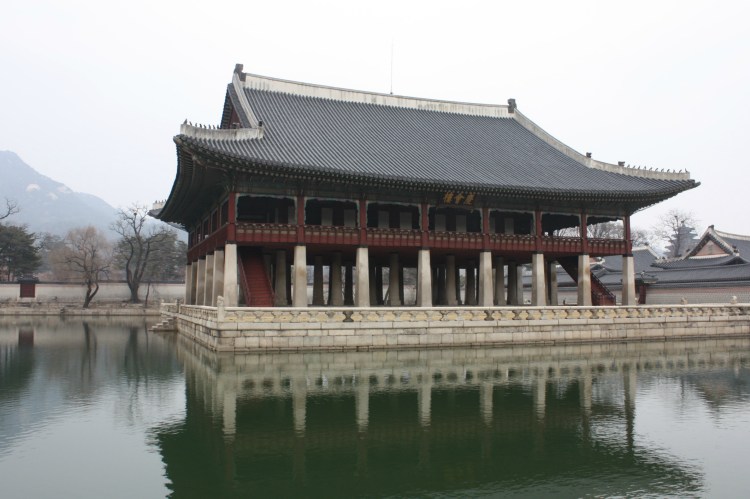
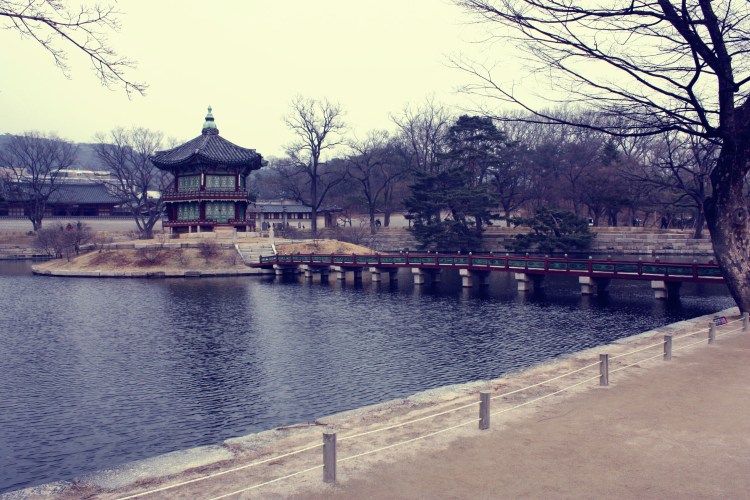
My favorite area within Gyeongbokgung was probably Gyeonghoeru (경회루) which is a pavilion that sits on a lake that was used for banquets etc. The outer columns are square, and the inner columns cylindrical to visually represent the idea of yin and yang. Interesting, but I think I just like the aesthetic of buildings on water ha ha. Very deep, I know.
An exhibition that was worth seeing in a chilling/horror related way was the exhibit of Empress Myeongsong’s death in the buildings where she was murdered by Japanese assassins. The Empress also known as Queen Min, was very influential in politics, so much so that the Japanese sent a secret envoy to brutally murder her. Apparently, it was difficult to ascertain who the Empress was, so they dragged out and savagely killed multiple women with their swords. When they figured out which was the Queen, they burned her body and spread the ashes. Gruesome. The exhibit had a room that was darkened and reverberated with sounds of heavy rain in a thunderstorm to give the atmosphere of that grisly night.
After meandering around the extensive grounds of the palace, we found out we also gained free entry to the Folk Museum next door. Highlights included an exhibit on the five traditional colors, miniature versions of traditional houses, and my boyfriend making jokes and making me laugh too loudly in a quiet environment (the usual there).
Once we finished with the museum we went back to the square and decided to check out the statue opposite Kind Sejong, curious as to who it was (It’s Admiral Yi Sun-Shin, thanks Google). During the time of our visit, the President was Park Geun-hye (now impeached), and as we drew closer to the other side of the square, we started to notice tents. At first, I thought it was some kind of homeless encampment – but nope, it was tons of protesters. There were depictions of Park’s head dripping with blood or her image locked in a cage. It was eerily quiet (and creepy), and with my boyfriend telling me about possible Anti-American sentiment, I became wary…..so we quickened our steps past the tents and went on our way to find our next caffeine fix for the day.
Still a few more palaces to go. Perhaps I can convince my boyfriend to play dress up with me and finish out the list of palaces wearing hanbok? Wish me luck with that one 😉
 Clumsy Adventurer
One thought on “A Couple Grand Palaces and A Secret Garden”