
Every fall, the nearby city of Suwon holds the popular Suwon Cultural Festival centered within the late 18th century Hwaseong Fortress. It’s a 3-day extravaganza with cultural performances, activities, and other events. My boyfriend and I had already planned on taking the train out to see the famous fortress, so the festival was an unexpected plus!
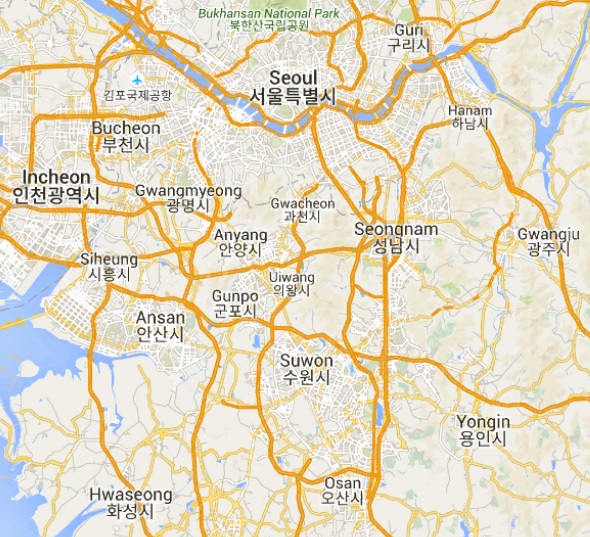
Getting to Suwon from Seoul is easy, we just caught the subway line one heading south. Finding seats was another story altogether but – after about an hour of standing – we arrived in Suwon. Pro-tip: I’ve since learned that the KTX can get you there faster and give you a guaranteed seat for only about 3,000 won more (that’s like $3).

Suwon’s famous historical attraction, Hwaseong Fortress, was built as a memorial to Crown Prince Sado by his son, King Jeongjo. Sado had an interesting and colored life that would fit perfectly into the world of Game of Thrones. Lots of death and mayhem: beheading eunuchs and showing off the decapitated head on a stick to the women of the house, raping or bludgeoning said court women, killing random servants to relieve stress, and reports of mental illness. He eventually died from starvation after being locked in wooden rice chest (for 7-8 days!) by his father, King Yeongjo.
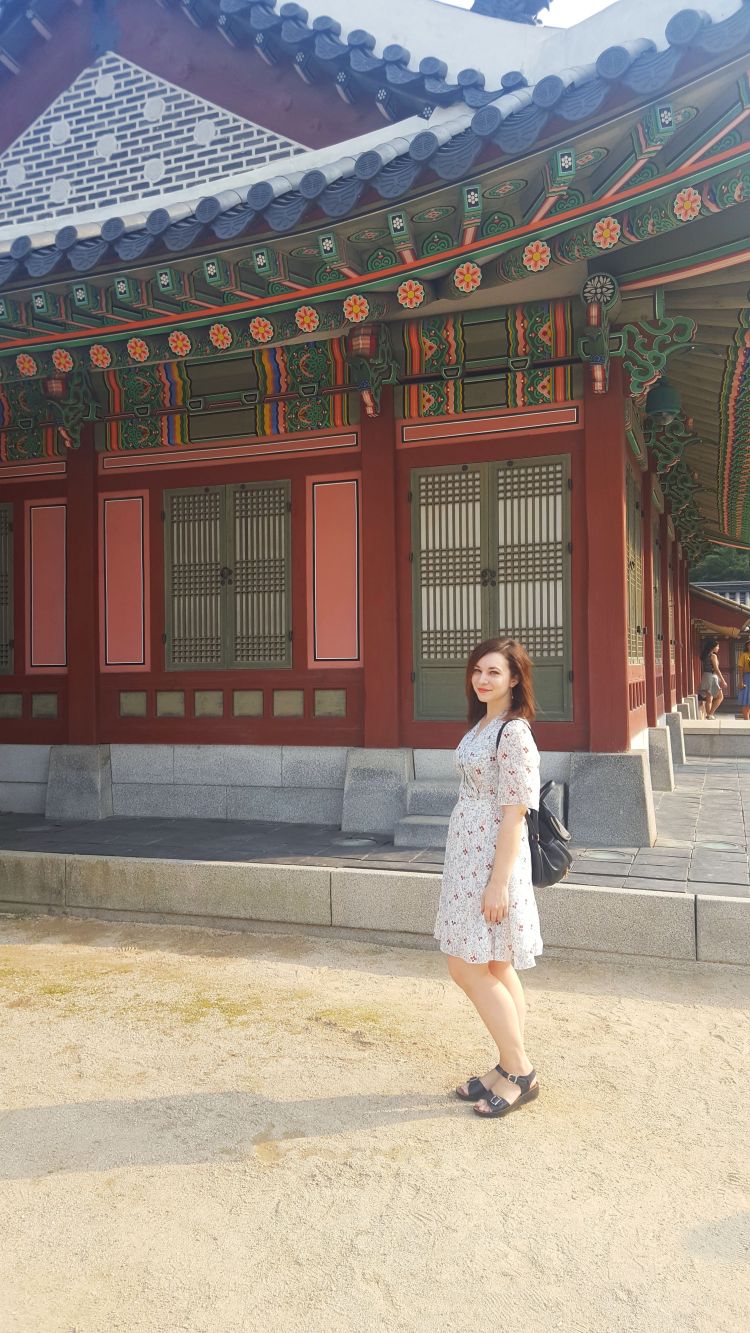
Upon our arrival to present-day Suwon, we exited the subway station and entered the festival by following our noses, my favorite method of travel. We found a huge field with countless food tents and a whole area dedicated to galbi 갈비 (marinated beef ribs – Suwon is famous for them). Adjacent to the field was the Haenggeung Palace, where sections of the compound were separated into different cultural events. One with traditional games like jegichagi 제기차기 (which looks a lot like playing hacky sack), another area had Korean traditional medicine to try (mostly teas to help those of different body constitutions), and areas with arts and crafts where you could paint in traditional dancheong designs. I also stalked some people dressed in traditional clothing to get a quick picture, as you do.


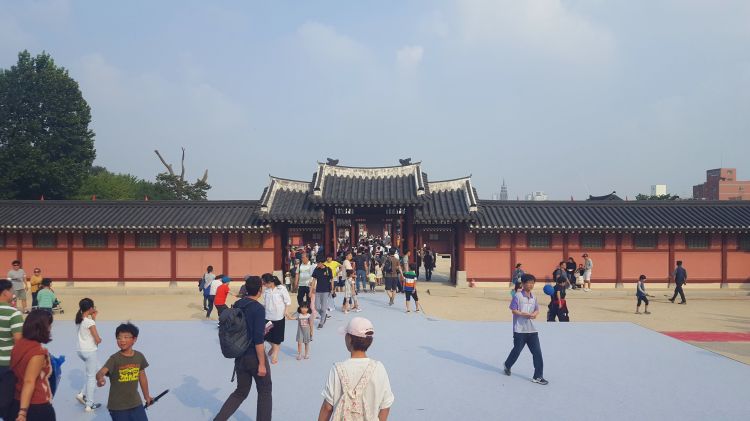
We eventually wandered outside of the main attraction and found even more food. The area around Haenggeung Palace was filled with little shops and food stalls; I couldn’t resist purchasing a fish shaped ice cream work of art, which was probably the entirety of my suggested daily calorie limit. And, after walking for about 10 more minutes or so, the irresistible smell of lamb skewers was unavoidable. I’m basically a pro at stuffing my face.
Once we had finished overindulging on food, it was necessary to get some exercise. We found stairs close by that ascended steeply up the mountain into Hwaseong Fortress. Being brave and fearless individuals we decided to climb them. At the top I was breathing pretty heavily while my boyfriend was practically skipping around – too much eating and not enough exercise for me. But we were climbing a mountain….so I think I get a pass. As always though, I was impressed by the older Korean men and women essentially strolling leisurely up a mountain with little to no obvious effort, while I’m huffing and puffing behind them. I hope to have that kind of stamina when I’m in my 60s, or now….
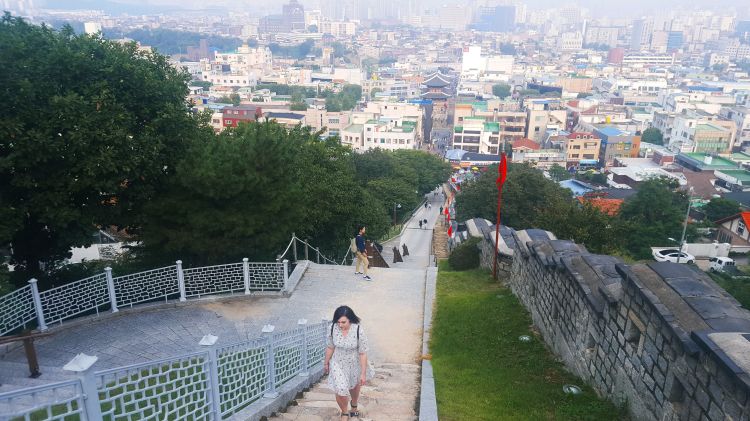
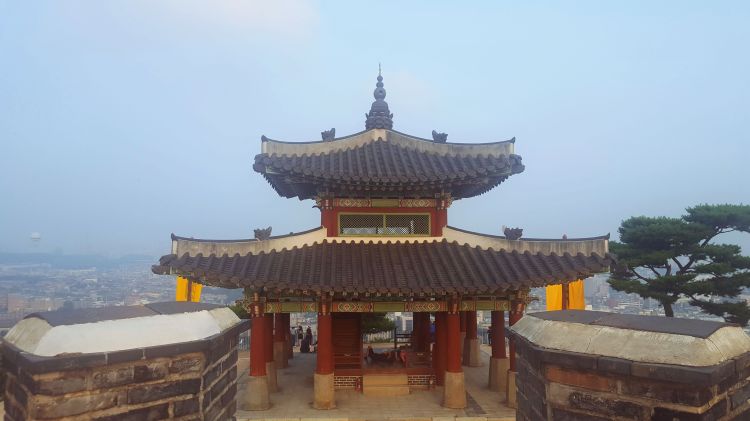
Hiking to the top was worth the trek though as we found this huge Korean bell and caught a stellar view of Suwon from a command post at the summit of Pandalsan Mountain.
The decorated bronze bell is Hyowon’s Bell (효원의 종·서장대), and for 1,000 won (less than $1 USD) you can ring it! It is representative of the filial piety of King Jeongjo to his father, the aforementioned Crown Prince Sado (or murder prince, whichever you prefer). It is always rung three times: first is in gratitude for the love of one’s parents, the second is to hope for happiness in one’s family, and the third as a prayer for self-improvement. Using the large wooden log suspended beside the bell, you swing it back to let it hit the bell which makes a booming, reverberating sound throughout the mountain (which is what attracted us to the bell in the first place).
Nearby is the command post which provides a panoramic view of the city of Suwon, and has a crossbowman platform which was fun to climb, if a little vertigo inducing.
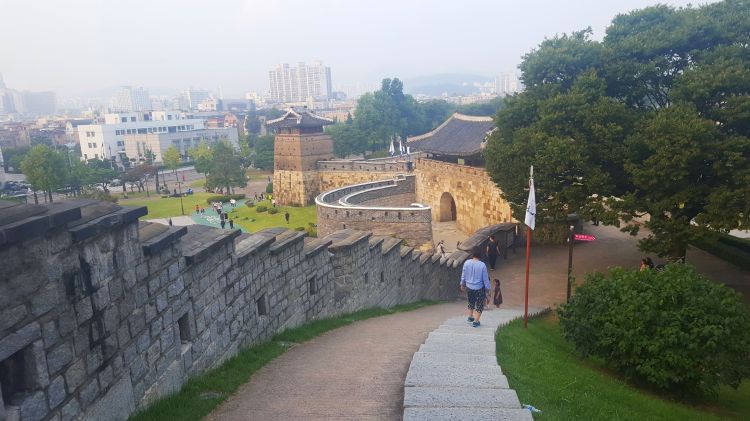
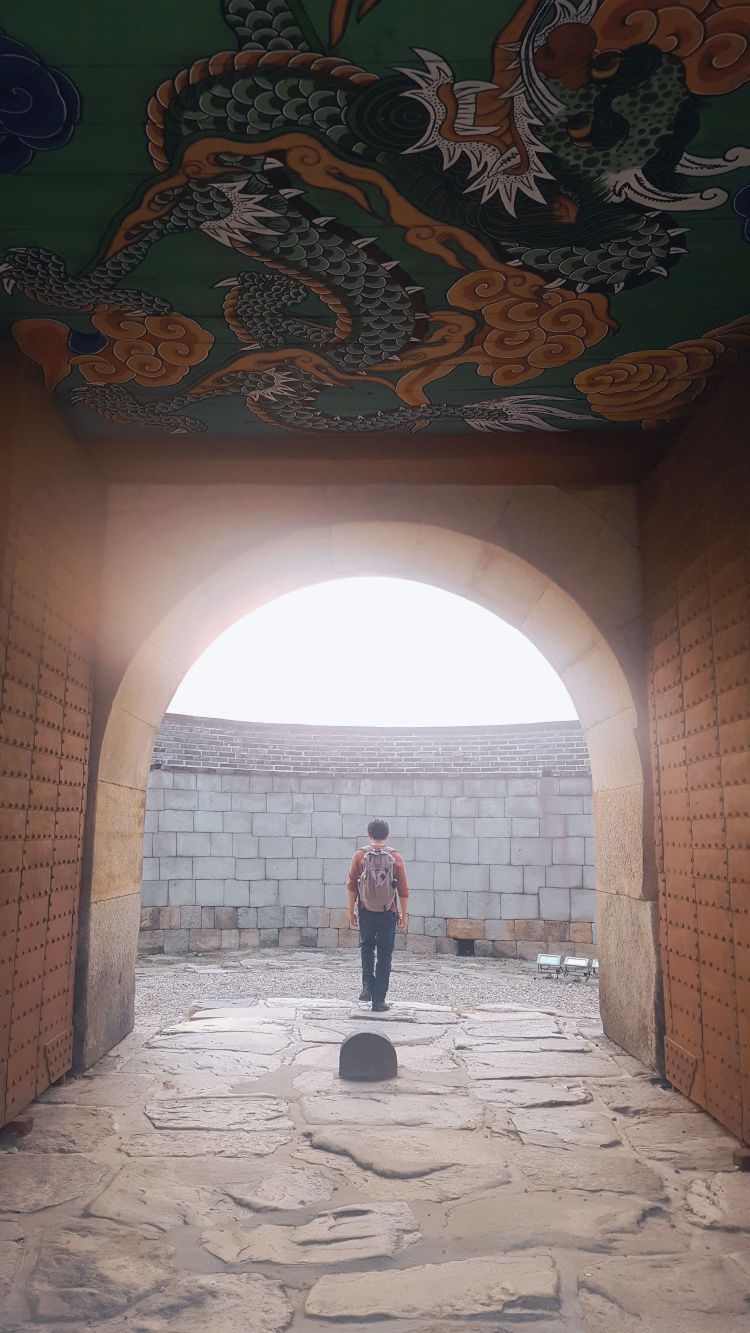
We followed the wall around, peeking through arrow slits and fortifications, and ended up at one of the gates which you can walk through and imagine what it might have been to be like a guard hanging out at the top. Hwaseomun Gate (화서문), or the western gate, has an interesting design with a crescent shaped wall extending out from the front of it, this allowed defenders to shoot arrows in the back of anyone trying to break down the door of the gate.
Afterwards we headed into the old part of town to grab some coffee. All the mountain hiking had tired us out.
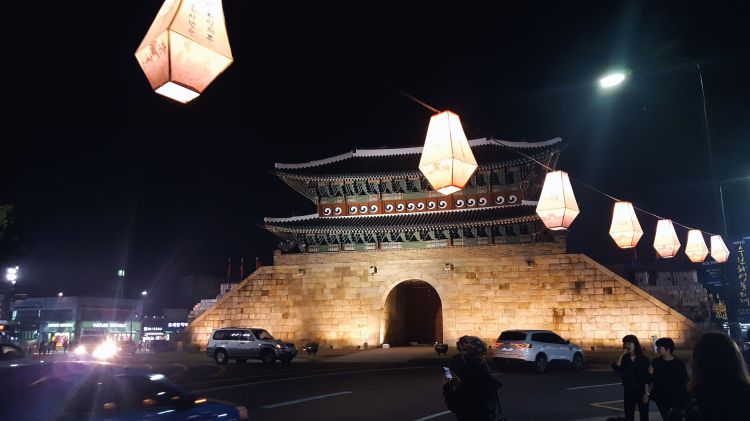
As the sun began to set we went back down into the palace when the lights began to come on throughout the fortress and mountain providing us with a romantic view of this beautiful area.



 Clumsy Adventurer